Looking after your teeth every day is the foundation of good oral health. Yet between common misconceptions and conflicting advice, it is not always easy to know what really matters. This article offers a clear, practical guide, whether you live in Woluwe-Saint-Lambert, Woluwe-Saint-Pierre, Kraainem or elsewhere in the east of Brussels.
Why does dental plaque form?
The mouth naturally contains bacteria. They constantly settle on the teeth and gums, forming an invisible film called dental plaque (or biofilm). When you consume sugars, these bacteria ferment them and produce acids. These acids attack tooth enamel and can eventually cause cavities or gum inflammation.
The good news: dental plaque can be removed mechanically, in other words by brushing and cleaning between the teeth. That is exactly what your daily routine is for. The Société de Médecine Dentaire (in French) explains this mechanism very clearly: bacteria, sugars and acids form a trio that regular brushing keeps in check.
Brushing: technique, timing and duration
Which technique should you use?
The technique most often recommended for adults is gentle brushing, with small circular movements or short back-and-forth strokes from the gum toward the tooth. The aim is to clean every surface: the outside, the inside and the chewing surface of each tooth.
- Tilt the brush slightly toward the gum.
- Brush without pressing too hard: excessive pressure damages enamel and irritates the gums.
- Don’t forget your tongue, which also harbors bacteria.
- After brushing, spit out the toothpaste without rinsing with water.
When should you brush?
We recommend brushing at least twice a day: in the morning and, above all, in the evening before bed. Evening brushing is especially important because saliva production drops at night, which reduces the teeth’s natural protection.
After an acidic drink or food, it is best to ask your dentist or hygienist when to brush again. Rinsing your mouth with water is enough in the meantime.
Manual or electric toothbrush?
Both can be effective, provided they are used properly. An electric toothbrush can be a real help for people with less dexterity, such as older children or seniors. In any case, replace your toothbrush (or brush head) as soon as the bristles start to splay.
Cleaning between the teeth: an essential step
However well it is used, a toothbrush does not reach the spaces between the teeth. Yet that is exactly where plaque builds up most often. Neglecting these spaces leaves the door open to cavities between the teeth and to gum inflammation, known as gingivitis.
Dental floss
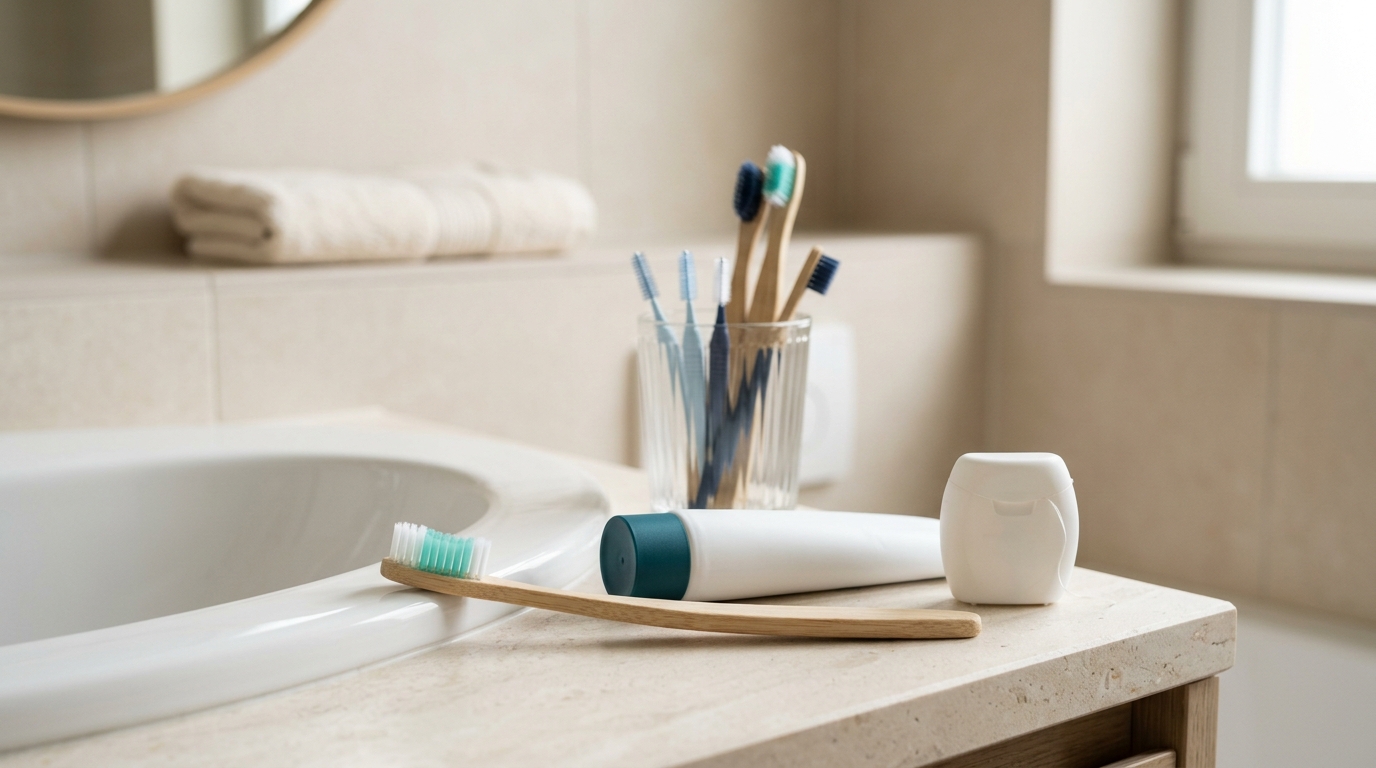
Dental floss is the basic tool for cleaning between the teeth. Gently slide the floss between two teeth, following the shape of each tooth in a C-shaped motion. If you are just starting, it is normal for your gums to bleed slightly the first few times: this bleeding usually decreases within a few days once the routine is established. If it persists, see a professional.
Interdental brushes
For people with wider gaps between their teeth, crowns, bridges or orthodontic appliances, interdental brushes are often better suited than floss. They look like small cylindrical brushes and come in several sizes. Choosing the right size matters: a brush that is too small will be ineffective, while one that is too large can irritate the gum. Your hygienist or dentist can advise you.
Water flossers
A water flosser (or oral irrigator) can complement your cleaning, especially around implants or orthodontic appliances. It does not replace floss or interdental brushes, but it is a useful addition.
Fluoride toothpaste: why does fluoride matter?
Fluoride is a mineral that strengthens tooth enamel and helps it resist acid attacks. It is one of the most useful tools for preventing cavities. It works by remineralizing slightly weakened areas of enamel before a real cavity forms.
For adults, a fluoride toothpaste is recommended without any particular restriction. For children, the fluoride content and the amount of toothpaste vary with age. The Société de Médecine Dentaire (in French), which relays the recommendations of Belgium’s Superior Health Council (October 2021), sets out the guidelines by age group: the right amount of toothpaste and fluoride content for each stage of a child’s development are clearly explained.
In practice, keep a few simple principles in mind:
- For young children, use a tiny amount of toothpaste (the size of a grain of rice) with a fluoride content suited to their age.
- Teach children to spit, but not to rinse heavily, so that the fluoride stays in contact with the teeth.
- For adults, spit after brushing without rinsing with water: the remaining film of fluoride toothpaste protects the enamel for longer.
If you are unsure which toothpaste best suits your child or your own situation, feel free to ask at your next appointment.
The complementary role of professional hygiene sessions
Even with a rigorous daily routine, some areas remain hard to reach. Tartar, which is calcified dental plaque, cannot be removed by brushing alone: it requires professional scaling.
At Clinique Keller, dental hygiene sessions are carried out by a hygienist using the GBT method (Guided Biofilm Therapy) with Air-Flow technology. This protocol removes biofilm, stains and tartar gently and methodically, area by area. The session is also an opportunity to get personalized advice on your brushing and your interdental cleaning tools.
These sessions are part of a preventive approach: they help detect early signs of gum inflammation, such as emerging gingivitis, before it progresses to a more advanced stage. To learn more about gum disease, our periodontology page gives a full overview.
Check-ups at the dentist: essential, even without symptoms
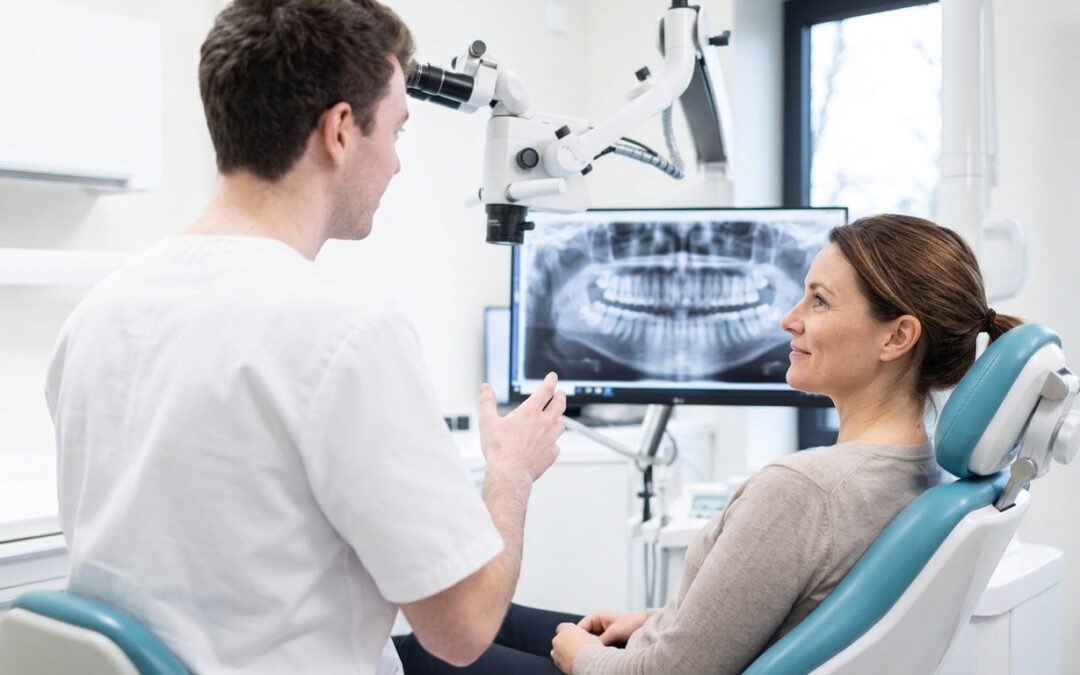
Good daily hygiene does not replace regular visits to the dentist. Some early cavities or gum problems are invisible to the naked eye and cause no pain at first. A regular check-up detects them early, while the treatment needed is still simple.
General dentistry at Clinique Keller includes a consultation and a full check-up, with X-rays if needed (panoramic or CT scan). This examination is the basis for follow-up tailored to your situation.
Key point: your home hygiene routine and professional follow-up go hand in hand. One does not replace the other.
In short: good daily habits
- Brush your teeth twice a day, morning and evening, with a fluoride toothpaste suited to your age.
- Clean between your teeth every day with floss or interdental brushes.
- Choose a fluoride toothpaste and spit without rinsing heavily after brushing.
- For children, adapt the amount of toothpaste and the fluoride content to their age, following the Superior Health Council’s recommendations.
- See a dentist regularly, even if you are not in pain.
- Have your teeth professionally scaled as often as your dentist or hygienist recommends.
In case of severe pain, swelling or dental trauma, contact Clinique Keller promptly for professional advice.
Book an appointment at Clinique Keller
Do you live in Woluwe-Saint-Lambert, Woluwe-Saint-Pierre, Kraainem, Etterbeek or elsewhere in the east of Brussels, and would you like a check-up or to meet our hygienist? You can book an appointment online on our website or call us at +32 2 772 10 15, Monday to Friday from 9 am to 6 pm. The clinic is easy to reach by metro (line 1, Gribaumont station).