For many parents, planning their child’s first visit to the dentist raises questions: at what age should you go? How can you make sure everything goes well? How do you avoid this first encounter leaving a bad memory? These are perfectly normal concerns, and there is a lot you can do beforehand so that this moment goes smoothly, for your child and for you.
This article offers parents practical tips for approaching this step calmly. It does not replace the advice of a healthcare professional: every child is different, and an examination by a dentist is still essential for an assessment suited to your child’s situation.
Why plan a first visit early?
The health of baby teeth matters as much as that of permanent teeth. These first teeth play a role in chewing, speech and the correct positioning of the future permanent teeth. An early consultation makes it possible to:
- check that the teeth and gums are developing normally;
- detect any growth anomalies before they get worse;
- introduce the child to good oral hygiene, adapted to their age;
- build a relationship of trust with the dental practice from the start.
This last point is often underestimated. A child who discovers the practice in a calm, reassuring setting, with no emergency or pain to treat, has every chance of staying relaxed about dental care throughout their life. The Société de Médecine Dentaire (souriez.be) (in French) recommends a first visit around the age of one: its prevention website offers useful guidance alongside your dentist’s advice.
Before the visit: what you can do at home
Choosing the right words
The way you talk to your child about this visit strongly influences how they approach it. A few useful principles:
- Avoid anxiety-inducing words: phrases such as “it won’t hurt”, “don’t be scared” or “it’s just a little shot” can paradoxically create worry where there was none.
- Present the visit as a discovery: “We’re going to see someone who takes care of teeth and who will check that yours are healthy.”
- Stay neutral and positive, without promising that everything will be perfect. Children pick up very easily on adults’ anxiety.
Age-appropriate books and materials
There are many picture books for children that tell the story of a first visit to the dentist in a light and fun way. Reading this kind of story together a few days before the appointment can help your child get used to the idea and ask their own questions. It is also a nice opportunity to talk about it calmly, without pressure.
Playing pretend
Children learn a lot through play. At home, you can play “tooth doctor” with a mirror or a small flashlight: one person pretends to examine the other’s teeth, then you switch roles. This kind of game takes the drama out of opening your mouth and being looked at.
Not passing on your own fears
If you have a difficult relationship with dental care yourself, be careful not to say so in front of your child. Your past experiences will not be theirs. Care for children has changed a great deal, and teams dedicated to pediatric dentistry now use approaches specifically designed for the youngest patients.
On the day: a few practical tips
Choosing the right time of day
Whenever possible, choose a time when your child is rested and in a good mood: avoid nap time or just before a meal if they tend to be irritable when hungry. A relaxed, attentive child will experience the visit more calmly.
Arriving early
Allowing a few extra minutes avoids the stress of running late and gives your child time to get used to the surroundings before entering the treatment room.
Staying calm and present
Your presence reassures your child. Stay available, without overprotecting them or anticipating what they might feel. Let them experience this at their own pace.
Bringing a favorite toy or comfort item
A familiar object can have a soothing effect. Feel free to bring it: this reassuring anchor helps your child feel safe in a new environment.
What to expect from the first consultation
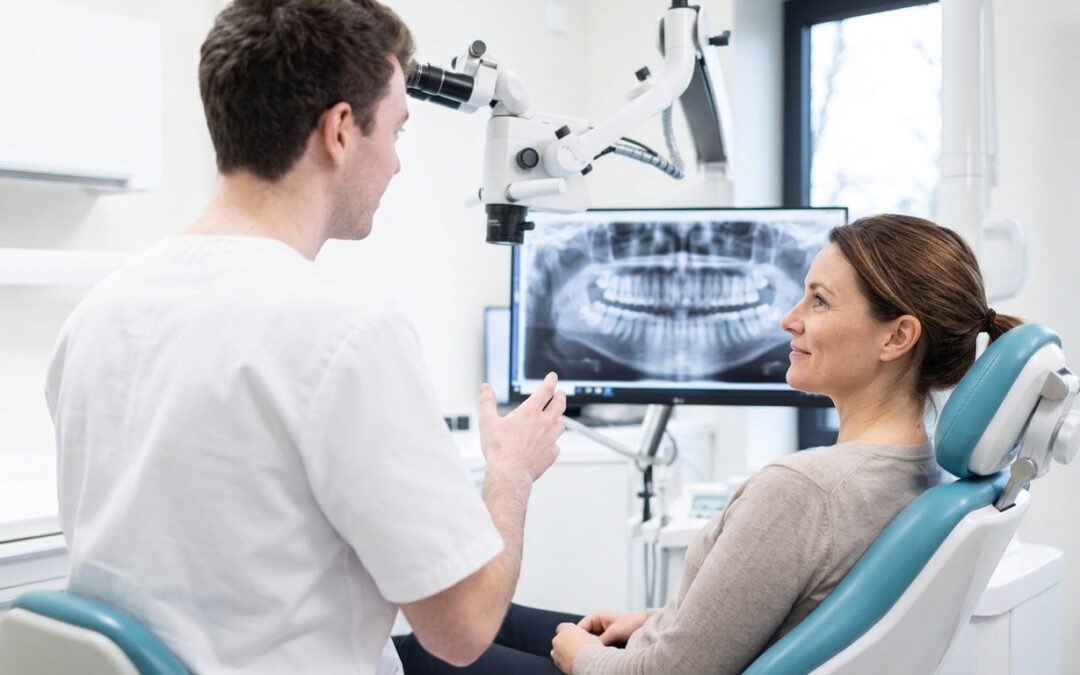
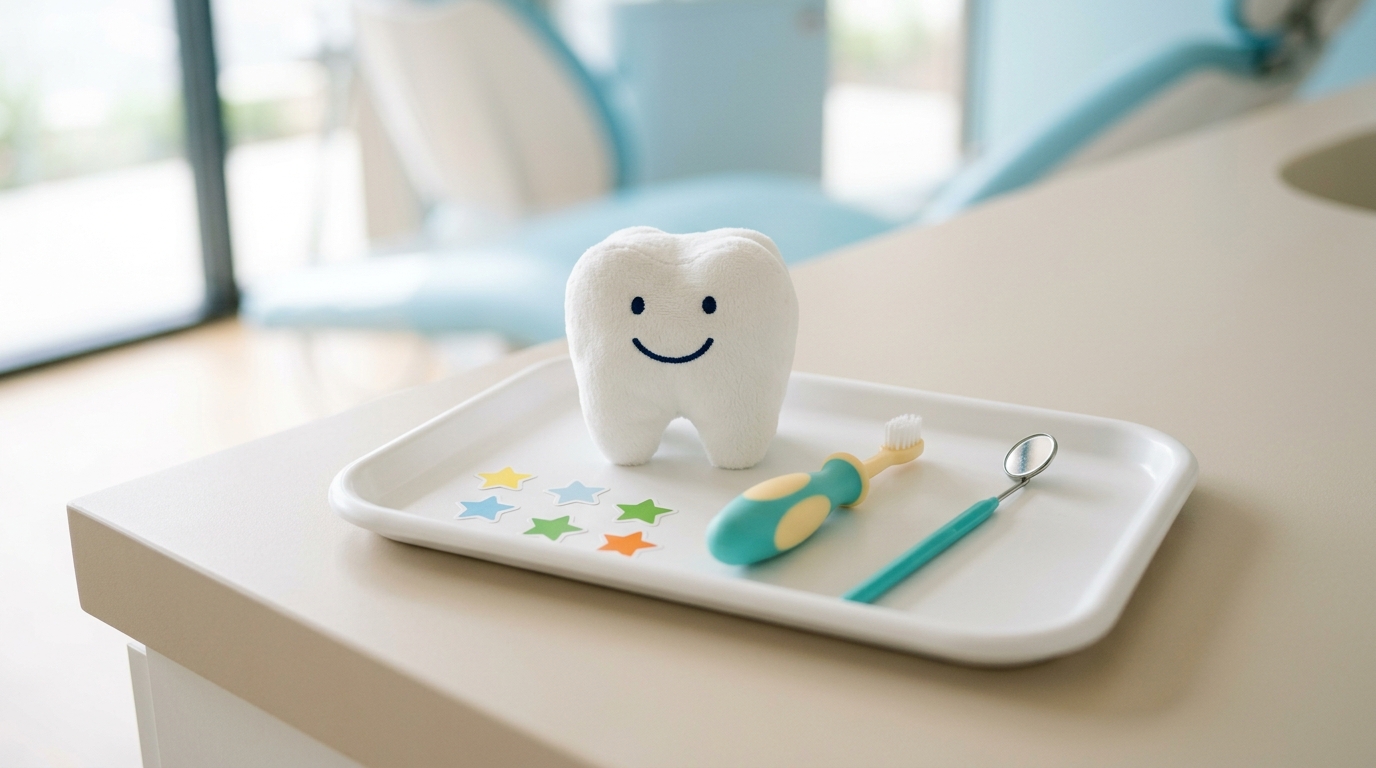
At Clinique Keller, the first pediatric consultation is designed to put the child at ease and let them discover the world of the dental practice calmly. The approach is gentle, playful and reassuring.
In practice, this visit includes:
- a full examination of the teeth and gums;
- early detection of any growth anomalies or dental problems;
- a positive introduction to oral hygiene, adapted to the child’s age.
The aim is not only clinical: it is also about building a lasting relationship of trust between the child, the parents and the care team. A child who feels welcome from the start is a child who will come back without fear for future check-ups.
After the visit: celebrating the experience
Once the consultation is over, take the time to praise your child for taking part, however the visit went. Value the effort of going, not just the outcome. Avoid promising a reward in advance, which could suggest that the visit is an ordeal to get through: instead, mark the occasion spontaneously and positively afterward.
If your child asks questions about what happened, answer simply and honestly, at a level they can understand. This openness builds their confidence for future visits.
What if your child is particularly anxious?
Some children are more anxious about medical care in general. This is very common and says nothing about how the visit will go. In that case, it can help to mention it to the team when you book, so that the staff can adapt their approach from the moment you arrive.
If your child is anxious, it is better to let them ask questions freely than to downplay their fears. Saying “it’s nothing” can sometimes have the opposite effect: acknowledging their emotions with kindness is often more effective.
If your child has pain, swelling or a dental injury, do not wait: contact the clinic promptly for advice.
Key points for preparing this first visit
- Talk about the visit in advance, using simple and positive words.
- Avoid passing on your own fears.
- Choose a time when your child is rested.
- Bring their comfort item or favorite toy.
- Stay calm and present without anticipating their reactions for them.
- Celebrate the experience after the visit, however it went.
- If your child is very anxious, let the team know when you book.
The first visit to the dentist is a step, not an ordeal. Well prepared, it can become a neutral or even pleasant memory that lays the foundation for a relaxed relationship with dental care for many years.
To learn more about Clinique Keller’s approach to pediatric dentistry, or to see all our specialties, visit our website.
Book an appointment at Clinique Keller
Would you like to plan your child’s first visit? You can book online or call us at +32 2 772 10 15, Monday to Friday from 9 am to 6 pm. Clinique Keller is located at Avenue de Broqueville 249 in Woluwe-Saint-Lambert and is easy to reach by public transport: metro line 1, Gribaumont station. We welcome families from Woluwe-Saint-Lambert, Evere, Woluwe-Saint-Pierre, Kraainem and the east of Brussels.