


Pediatric dentistry
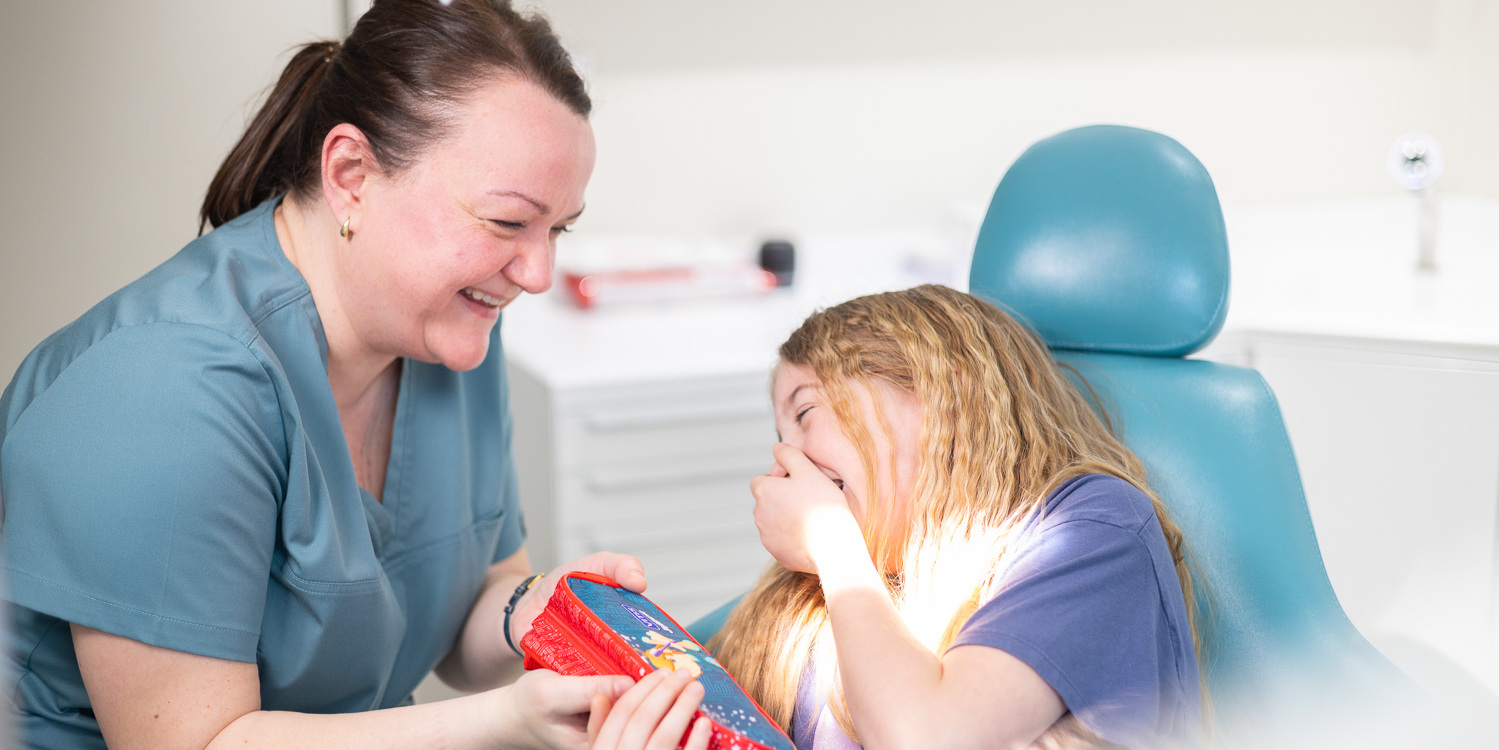
Child-friendly care in a caring, secure environment.
Pediatric dentistry
Your children’s smiles are our priority
Pediatric dentistry, or pedodontics, is dedicated to the oral health of children, from birth to adolescence. Our approach is based on caring and education, to build a relationship of trust from the earliest age. Our practitioners ensure the proper development of baby and permanent teeth, while supporting parents in the acquisition of good hygiene habits to guarantee a healthy smile throughout growth.
First visit and playful assessment
The first consultation plays a key role in building the child’s confidence and allowing him or her to discover the world of the dental practice with confidence. Using a gentle, reassuring and playful approach, we carry out a complete examination of the teeth and gums.
This check-up enables early detection of any growth anomalies or dental problems, while raising awareness of the importance of good oral hygiene in a positive, age-appropriate way.
Preventing and sealing grooves
Newly erupted permanent teeth are particularly susceptible to decay. Groove sealing is a simple, painless preventive treatment involving the application of a thin protective resin to the masticatory surfaces of molars.
This protection limits the build-up of bacteria and food residues in the hard-to-clean grooves, helping to preserve tooth enamel and health over the long term.
Caring for baby teeth (cavities)
Even though they are temporary, milk teeth play a crucial role in chewing, speaking and maintaining space for future teeth. We treat cavities using appropriate, minimally invasive techniques, always with the child’s comfort in mind. Preserving a healthy baby tooth is essential to avoid complications in adult dentition.
Brush education and nutrition
Oral hygiene is learned from an early age. During each visit, we teach children brushing techniques adapted to their age and dexterity. We also talk to parents about eating habits, particularly sugar management, to help prevent cavities.
Orthodontic growth monitoring
Early detection of dental alignment problems or jaw imbalances means that action can be taken at the most favourable moment for the child’s development.
We carefully monitor the development of the dentition to quickly identify any anomalies requiring orthodontic treatment. Timely intervention can help to guide growth harmoniously and reduce the need for future orthodontic treatment in adolescence.
Managing stress and apprehension
We know that some dental appointments can be frightening for children. That’s why our team adopts a gentle, age-appropriate approach, using reassuring language and positive psychology techniques to turn every appointment into a serene, pleasant experience.
Our priority is to establish a lasting relationship of trust, so that no child develops a fear of teeth, thus promoting regular check-ups and lifelong good oral health.
Making an appointment
Book an appointment online, fast
24-hour availability to choose your specialist and time slot with ease.
Other Clinique Keller specialties
FAQ
Frequently asked questions : Pediatric dentistry
Because the dental health of young children often raises a number of questions, we’ve put together a list of answers to the questions most frequently asked by parents at the Clinique Keller. Our aim is to provide you with reassuring support for your child’s dental care.
At what age should my child visit the dentist for the first time?
It's advisable to make an appointment as soon as the first milk teeth appear, and no later than the age of 2. This early visit allows us to establish a climate of trust, check that the teeth are properly set and give parents the first advice on hygiene and diet.
Why is it important to care for baby teeth, since they're about to fall out?
Milk teeth are essential: they act as guides for the permanent teeth, enabling good speech and efficient chewing. Untreated decay in a baby tooth can cause severe pain, infection and even damage to the germ of the permanent tooth below.
How can I prepare my child for his first consultation so that he doesn't get scared?
Ideally, you should present the visit in a positive, natural way, without using words that might worry him (such as "sting" or "pain"). You can explain that the dentist will "count his teeth" or "make his smile shine". At Clinique Keller, we use a playful approach to keep the experience pleasant.