

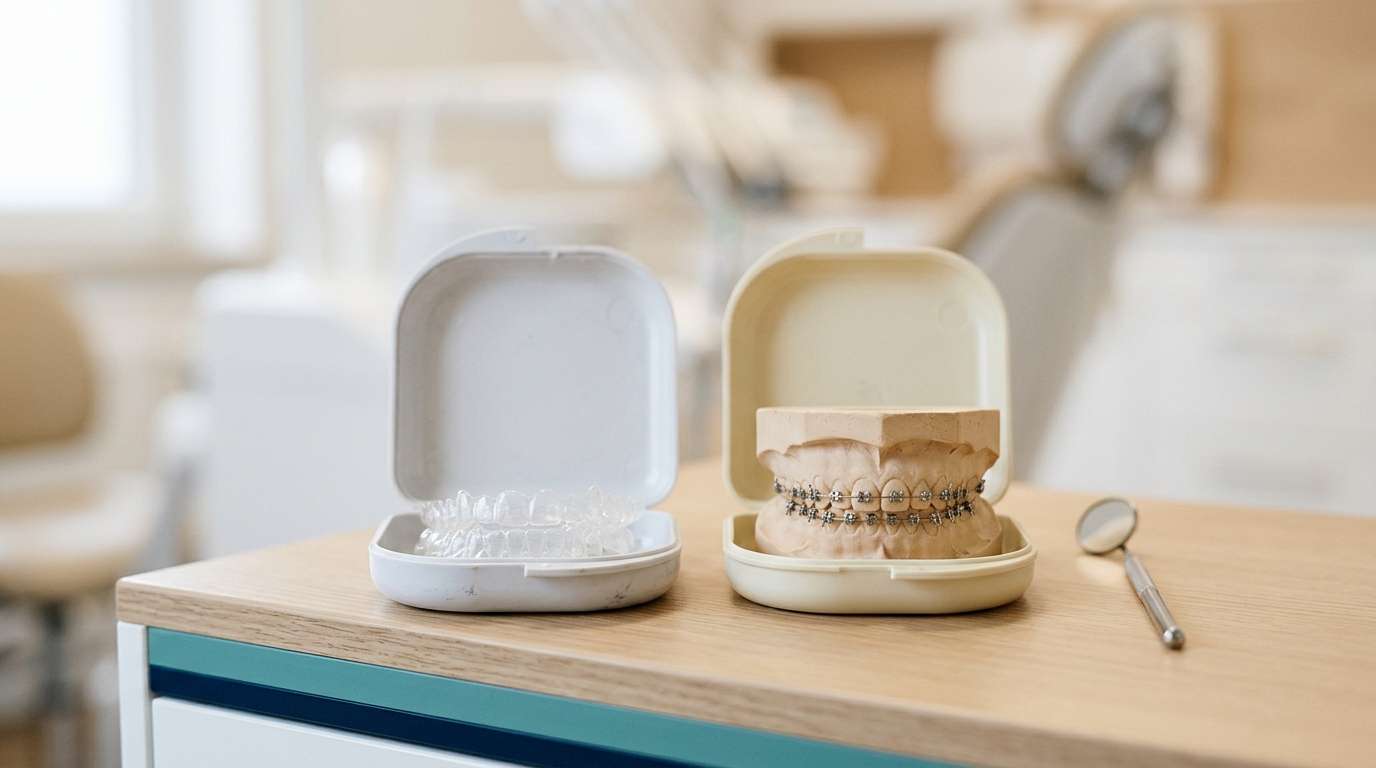
Both methods move the teeth gradually and in a controlled way. They differ mainly in how visible they are, how comfortable they feel day to day and how much involvement they ask of the patient. The right choice depends on your dental situation and your lifestyle: only an orthodontic assessment can determine it.
How does each method work?
Fixed braces consist of brackets (small attachments bonded to the teeth) connected by a wire. The wire applies a gentle, continuous force, and the orthodontist adjusts it at check-ups. The appliance stays in the mouth at all times.
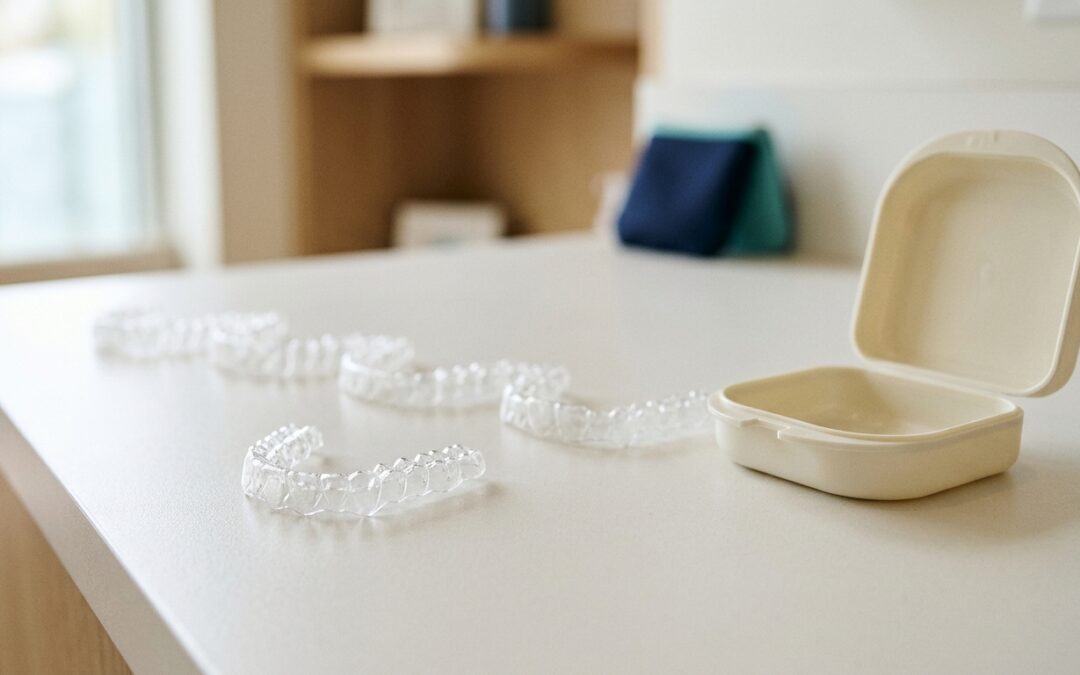
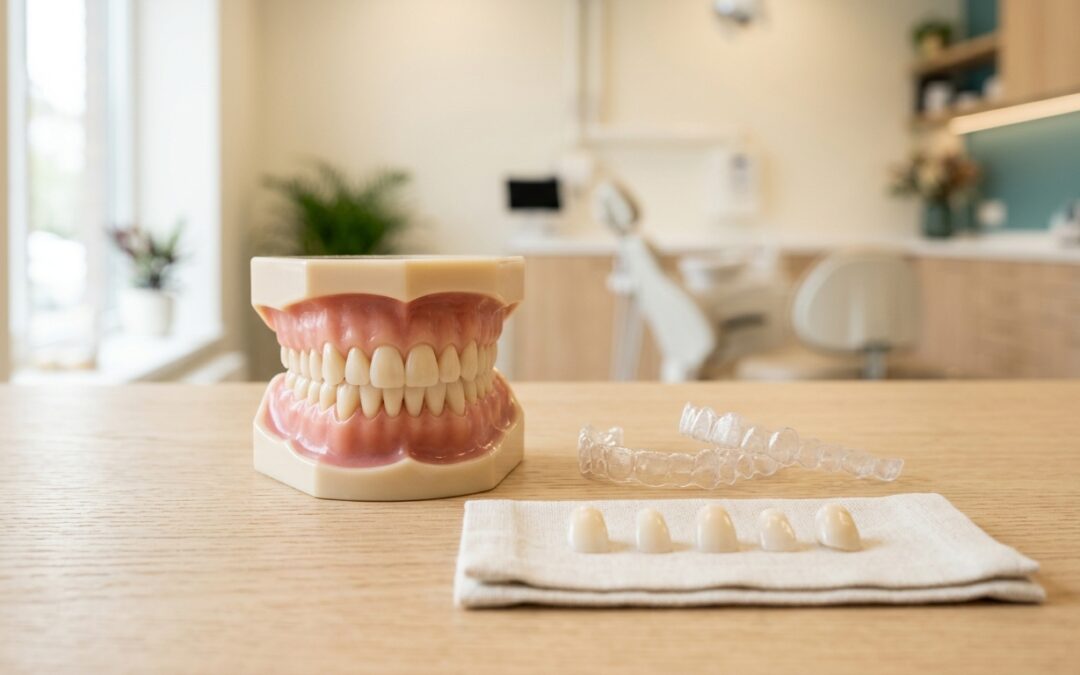
Clear aligners are plastic trays, made to measure from a digital scan of your teeth. Each tray moves the teeth a small, pre-planned distance. You switch to the next one at home, at the pace set by the orthodontist.
“Invisalign” is the best-known brand, so much so that its name is often used for this type of treatment. Clinique Keller offers comparable custom-made aligners from another brand: the principle and the process are the same. For details of how it works, our page on clear aligners explains the process step by step.
The comparison at a glance
| – | Clear aligners | Fixed braces |
|---|---|---|
| Visibility | Discreet, almost invisible | Visible on the teeth |
| Wear | Removable, taken out to eat | Fixed, in the mouth at all times |
| Comfort | Smooth surface, no bonded attachments | Brackets and wire that can irritate cheeks and lips |
| Hygiene | Usual brushing once removed | Careful brushing around the brackets |
| Eating | No restrictions, trays removed | Hard or sticky foods to avoid |
| Discipline | Regular wear is essential | Little dependent on the patient |
| Follow-up | Trays changed at home, regular check-ups | Adjustments at the clinic |
- Visibility
- Discreet, almost invisible
- Wear
- Removable, taken out to eat
- Comfort
- Smooth surface, no bonded attachments
- Hygiene
- Usual brushing once removed
- Eating
- No restrictions, trays removed
- Discipline
- Regular wear is essential
- Follow-up
- Trays changed at home, regular check-ups
- Visibility
- Visible on the teeth
- Wear
- Fixed, in the mouth at all times
- Comfort
- Brackets and wire that can irritate cheeks and lips
- Hygiene
- Careful brushing around the brackets
- Eating
- Hard or sticky foods to avoid
- Discipline
- Little dependent on the patient
- Follow-up
- Adjustments at the clinic
Visibility and comfort: what you feel day to day
Aligners are transparent and follow the shape of the teeth. In most professional or social situations, they go almost unnoticed. Their surface is smooth: there is no wire or bonded attachment rubbing against the cheeks.
Fixed braces are more noticeable. They can cause minor irritation of the mucous membranes (the inner lining of the cheeks and lips), especially in the first few days and after certain adjustments. Orthodontic wax can then bring relief. With both methods, some discomfort or tooth sensitivity is common after each new stage, because the teeth are being put under load.
Hygiene and eating
Aligners come out for eating and for brushing your teeth. Your hygiene routine therefore stays the same as before treatment, and no food is off limits. In return, the trays also need rinsing and cleaning, and must be put back in after every meal.
With fixed braces, dental plaque (the biofilm, a film of bacteria that builds up on the teeth) accumulates more easily around the brackets and under the wire. Brushing takes more care, sometimes with interdental brushes. Very hard or sticky foods can dislodge a bracket and are best avoided. Inadequate brushing encourages gingivitis (inflammation of the gums), which is why a good routine matters, as described in our article on the oral hygiene routine.
The discipline required of the patient
This is the most decisive criterion. Aligners only work when they are worn: wearing them too irregularly slows treatment down or compromises it. They therefore suit mainly patients who can keep them in the mouth as the orthodontist instructs, and who will not lose them.
Fixed braces, by contrast, work continuously, whether or not the patient thinks about them. For a teenager who is not very consistent, or for someone who worries about forgetting their trays, this point matters in the decision.
Which method for which situation?
Aligners suit most adults and teenagers, for example in cases of:
- crowded, overlapping teeth;
- gaps between the teeth;
- teeth that have moved after a previous brace.
Some situations are still better treated with fixed braces. It is the orthodontic assessment that determines this, not an initial preference. Both solutions are offered at the clinic, whether you are an adult or a teenager. If you are wondering whether your age is an obstacle, our article on adult orthodontics in Brussels answers that question.
The role of the orthodontic assessment
The choice is made together, based on objective findings. At Clinique Keller, it takes place in two stages:
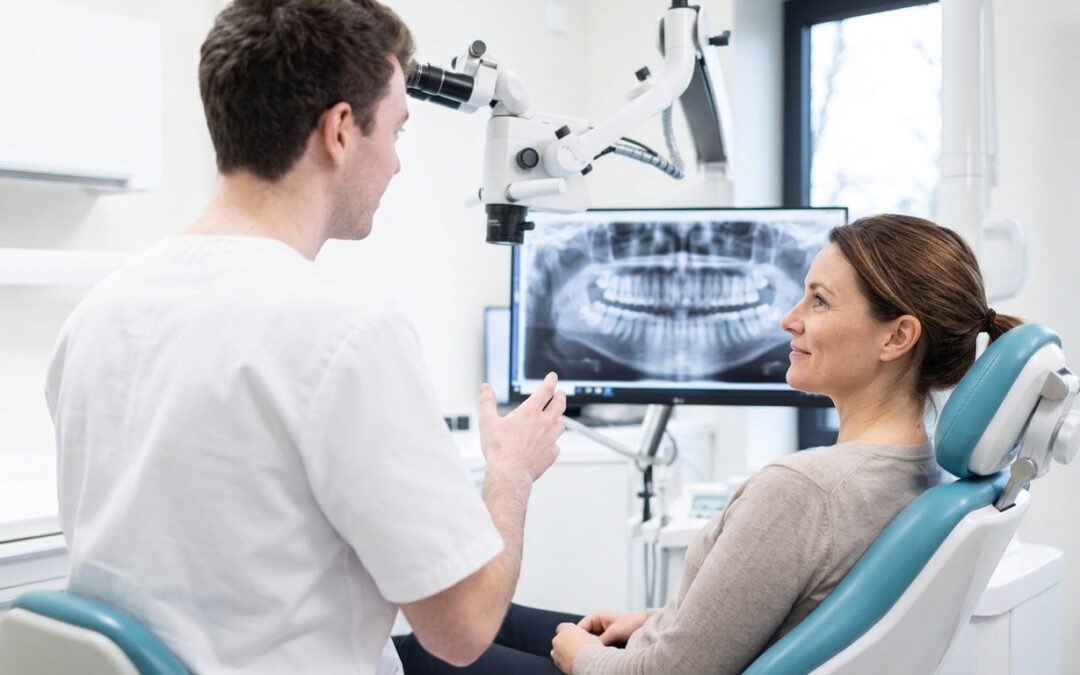
- Assessment consultation (first appointment, 30 minutes): scan, photos and X-rays, to analyse the alignment, the occlusion (the way the teeth meet) and the condition of the gums.
- Treatment plan and quote (second appointment): what will be corrected, the number of trays where relevant and the estimated duration.
The price presented covers the whole treatment: appliance, consultations and retainers. A retainer (a device that holds the teeth in place once they are aligned) follows any treatment, whichever method is used. You are seen by the same orthodontist from the assessment through to the end of treatment. The clinic has offered aligner treatments since 2019. For more on our approaches, you can read the clinic’s orthodontics page.
This article is for information only and does not replace an examination: only an orthodontist can tell you which solution suits your mouth. For adults, some supplementary insurance policies may contribute towards orthodontic costs, while compulsory health insurance generally does not cover them; the clinic will advise you on your quote (information from Mutualité chrétienne).
Book an appointment
To review your situation, you can book an assessment at Clinique Keller, Avenue de Broqueville 249 in Woluwe-Saint-Lambert: book online via our contact page, or by phone on 02 772 10 15, Monday to Friday from 9 am to 6 pm. The clinic is easy to reach on metro line 1, Gribaumont station.