Baby teeth are often seen as temporary. They will fall out anyway, people think. Yet they play an essential role in your child’s development: they allow your child to chew and speak properly, and they hold space for the permanent teeth. Protecting them from an early age is an investment in lifelong oral health.
In this article, we explain why children are particularly prone to cavities, what fissure sealants are and how to complement this protection with good everyday habits.
Why are children’s teeth more vulnerable to cavities?
Baby teeth, and the first permanent teeth that follow them, have thinner and more porous enamel than mature adult teeth. This makes them more sensitive to acid attacks caused by bacteria in the mouth.
On top of this come several factors specific to childhood:
- Children cannot brush properly on their own until a certain age.
- Sugary snacks and fruit drinks are common in their diet.
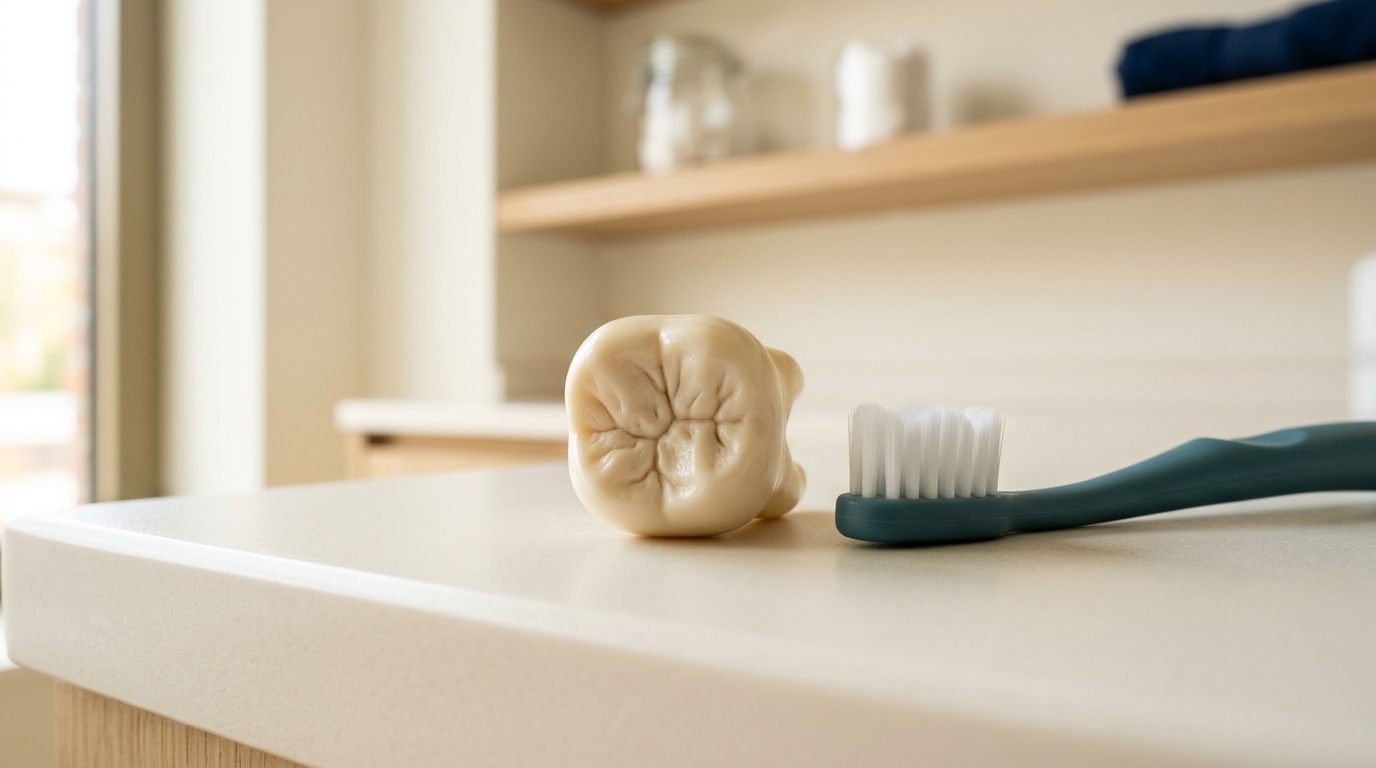
- Baby molars, like the first permanent molars, have deep grooves (fissures) on their chewing surface. These small pits are hard to clean with an ordinary toothbrush.
It is precisely in these fissures that most cavities in children develop. Bacteria build up there and produce acids, and a cavity can form silently, without pain at first.
What is a fissure sealant?
A fissure sealant is a simple preventive treatment. A thin layer of resin is applied to the grooves of the molars, creating a smooth surface that prevents bacteria and food debris from settling there.
It is not a curative treatment: it does not treat an existing cavity. It is a protection placed on a healthy tooth before a cavity appears.
The treatment itself is quick and does not require drilling or removing any tooth structure. The child does not need anesthesia. The tooth is cleaned and lightly prepared, then the resin is applied and hardened in a few seconds with a small light. The result is invisible, or nearly so.
In pediatric dentistry at Clinique Keller, fissure sealing is one of the preventive treatments offered to protect children’s teeth before problems arise.
Which teeth benefit from sealants?
The teeth most concerned are the molars, both baby molars and the first permanent molars. These teeth have irregular chewing surfaces, with pits and ridges that brushing alone cannot clean effectively. The first permanent molar, which comes in around age six, deserves particular attention: the Société de Médecine Dentaire has a dedicated sheet on it (in French), explaining its role and the value of sealing it at this stage.
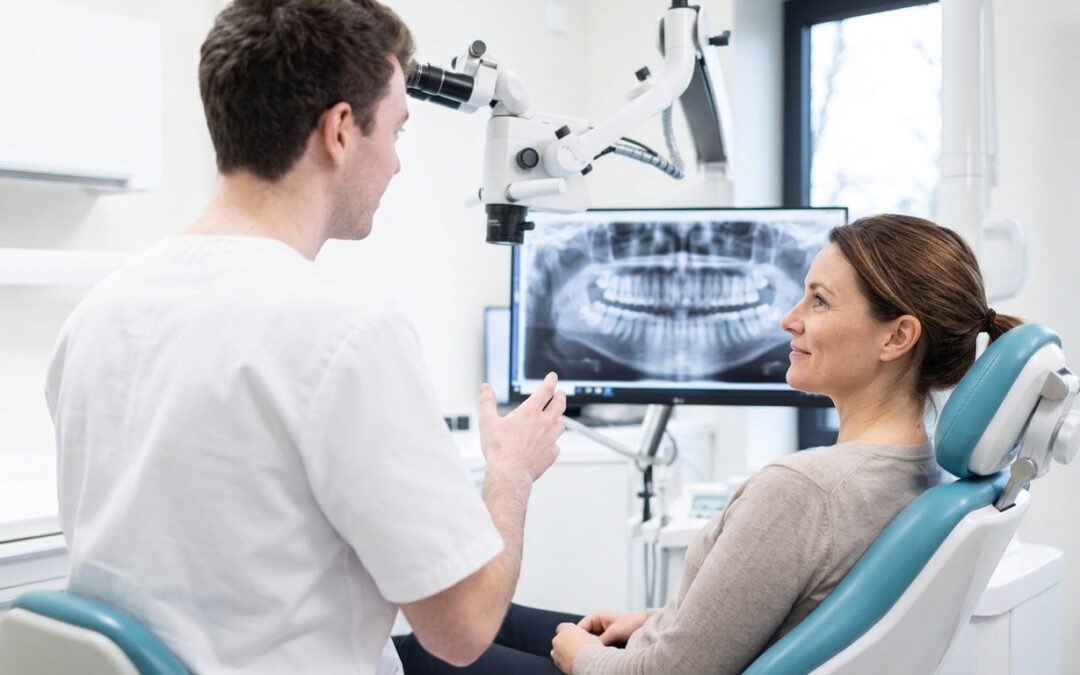
The dentist assesses during the consultation whether a sealant is right for your child. Every mouth is different: tooth shape, eating habits and overall hygiene are all taken into account. A clinical examination is essential before any decision.
Is a sealant enough on its own?
A fissure sealant protects the top surfaces of the molars. But it does not cover the spaces between the teeth or the other tooth surfaces. That is why it is always part of an overall hygiene routine, never a replacement for it.
For effective protection, it is important to combine several daily habits.
Good oral hygiene habits at home
Brushing: a gradual learning process
Brushing starts as soon as the first baby tooth appears. At first, you, the parent, brush your child’s teeth. Around the age of seven or eight, your child can gradually take over, but parental supervision is still advisable until they have mastered it.
- Brush twice a day: in the morning and, above all, in the evening before bed.
- Use a fluoride toothpaste suited to your child’s age.
- Choose a toothbrush with a small head and soft bristles.
- Take your time: effective brushing lasts about two minutes.
Floss and interdental brushes
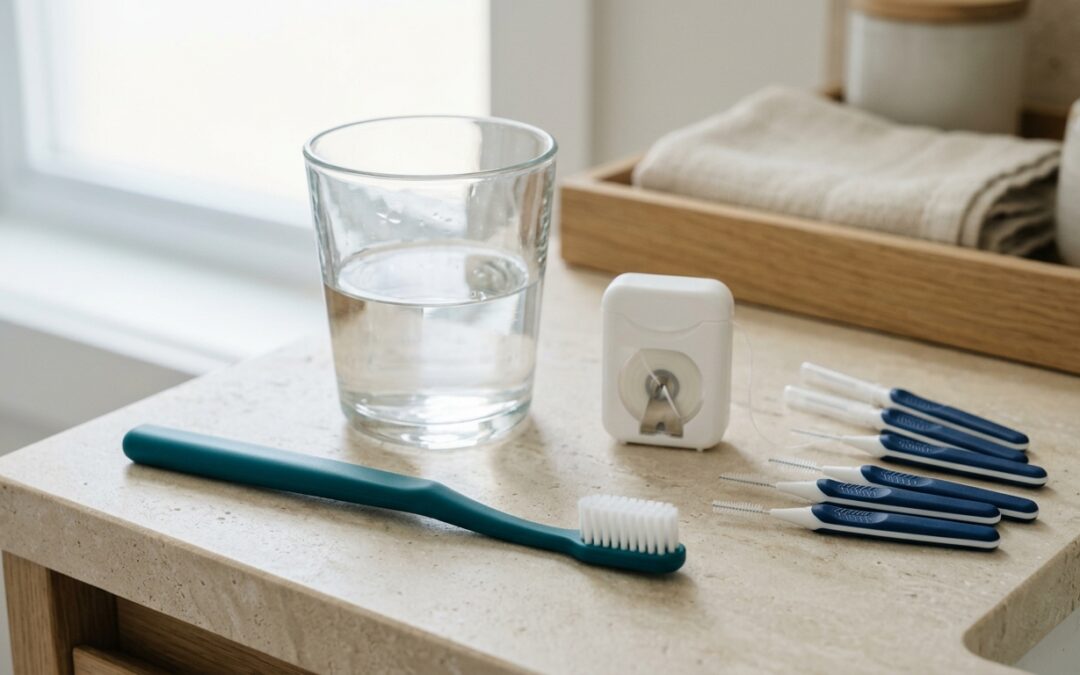
Brushing alone does not clean the spaces between the teeth. As soon as two teeth touch, it is useful to floss to remove the plaque (biofilm) that builds up there. For children, special floss holders can make this easier.
Diet: a key role that is often underestimated
Fermentable sugars, in other words the sugars that bacteria in the mouth turn into acids, are the main enemies of teeth. They include candy, sugary drinks, fruit juices and even some seemingly harmless foods.
A few simple habits can make a real difference:
- Limit snacking between meals: each time your child eats or drinks is a new exposure to acids.
- Choose water as the main drink, especially between meals and at night.
- Avoid putting your child to bed with a bottle of milk or fruit juice.
- End meals with a neutral or slightly protective food, such as a piece of cheese.
Check-ups at the dentist
Regular visits to the dentist make it possible to monitor how the teeth are developing, detect any early cavity and tailor preventive advice to each child. These visits are also an opportunity to check existing sealants and renew them if needed.
Prevention is above all a partnership between you, your child and the dental team.
When should you see a dentist promptly?
If your child complains of tooth pain, or if you notice a dark spot on a tooth or swollen gums, do not wait for the next check-up. Contact the clinic promptly for an assessment.
Will my health insurance fund contribute?
Some preventive treatments for children may be partly reimbursed under the Belgian INAMI/RIZIV fee schedule and by your health insurance fund. To find out the exact conditions that apply to your situation, please contact us directly: our team can guide you and prepare a quote if needed.
To learn more about all the care offered to children at Clinique Keller, see our pediatric dentistry page. You can also discover all our specialties for complete care for the whole family.
A child who grows up with good oral hygiene habits and well-protected teeth has a valuable head start for their future health.
Book an appointment at Clinique Keller
Would you like to have your child’s teeth checked or learn more about fissure sealants? Book an appointment at Clinique Keller, Avenue de Broqueville 249, in Woluwe-Saint-Lambert. We welcome families from Woluwe-Saint-Lambert, Woluwe-Saint-Pierre, Kraainem, Evere, Schaerbeek and the east of Brussels.
Book online via our contact page, or by phone at +32 2 772 10 15, Monday to Friday from 9 am to 6 pm. Easy access by metro: line 1, Gribaumont station.