It is a question many parents ask, often with a hint of worry: at age 5, the permanent teeth are not there yet, so why talk about orthodontics? The answer may come as a surprise: it is precisely because the jaws are still growing that this period is often ideal for observing and, if necessary, intervening gently. This is known as interceptive orthodontics.
This article is for parents of young children, particularly in Kraainem, Woluwe-Saint-Pierre and Woluwe-Saint-Lambert, who wonder whether an early orthodontic check-up is really useful or whether it can wait.
Interceptive orthodontics: what exactly is it?
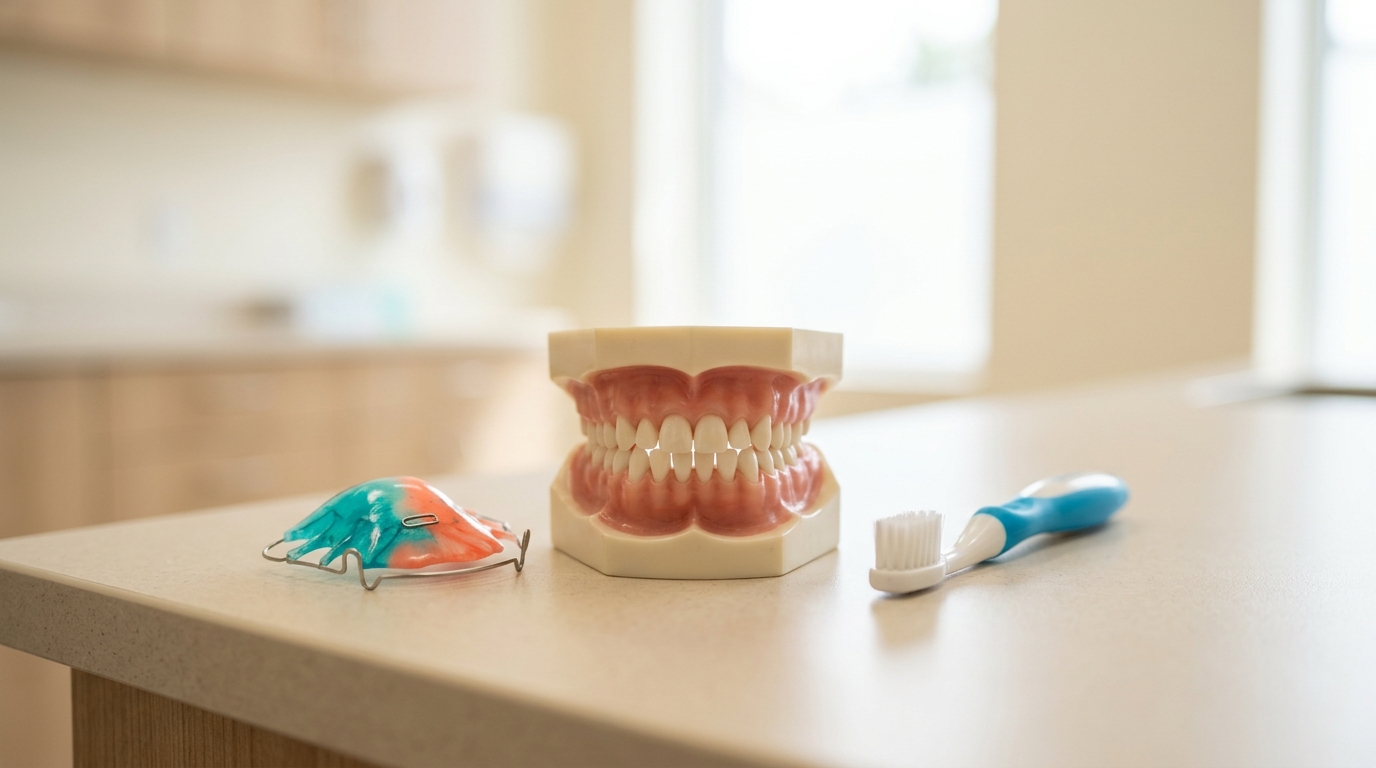
Interceptive orthodontics is a preventive approach. It does not aim to correct an adult smile, but to guide the growth of the jaws and baby teeth in order to anticipate possible problems before they become established.
In practice, this means observing how the jaws are developing, the position of the baby teeth and the child’s habits (thumb sucking, mouth breathing, atypical swallowing). Some of these factors, if not detected in time, can negatively affect the development of the dental arch and facial bones.
At Clinique Keller, interceptive orthodontics is offered from age 5. This is not an absolute rule: everything depends on each child’s own development. But this first consultation allows the practitioner to take an expert look and reassure parents, or to plan a light intervention if it proves useful.
Why act early rather than wait?
Many parents instinctively wait until all the permanent teeth are in before seeing an orthodontist. Sometimes that is enough. But in some cases, waiting can make things more complicated.
Here is why an early consultation can be beneficial:
- The jaws are still malleable. In a young child, the facial bones are growing rapidly. The direction of that growth can be guided with light appliances, which becomes harder once growth is complete.
- Some problems can be spotted early. A mismatch between the upper and lower jaws, a crossbite (when the lower teeth sit in front of the upper teeth), or a lack of space visible from the baby teeth onward are signs that deserve early attention.
- Later treatment can be simplified. By correcting certain problems at a young age, it is sometimes possible to reduce the length or complexity of orthodontic treatment in adolescence, or even avoid it in some cases.
- Habits can be addressed. Prolonged thumb or pacifier sucking, mouth breathing, certain ways of swallowing: these habits can distort the dental arches. Acting early also means helping the child break them.
It is important to stress that a consultation at age 5 does not necessarily mean treatment will start right away. In many cases, the practitioner simply observes, reassures the parents and plans regular follow-up. An examination by a specialist is still needed to determine what is right for each child.
What signs should parents watch for?
You do not need to be a dentist to notice certain signs. Here are some situations that may justify a consultation, even in a very young child:
- Your child still sucks their thumb or uses a pacifier beyond early childhood.
- They breathe mainly through their mouth, especially at night.
- Their lower teeth close in front of their upper teeth when they bite.
- You notice a visible mismatch between their jaws.
- There is a lot of space between their baby teeth… or, on the contrary, very little.
- They snore regularly or still drool a lot outside teething periods.
These are not diagnoses. Only a clinical examination can assess the situation. But if you recognize several of these situations, a consultation with a specialist can give you clear answers and spare you unnecessary worry.
How does a child’s first orthodontic consultation work?
The first visit is above all a time for observation and discussion. The practitioner examines the child’s mouth, looks at the position of the baby teeth, the state of the jaws and any habits. They talk with you, answer your questions and explain what they see in plain language.
No appliance is fitted at this initial consultation. The aim is to take stock of the situation and determine whether treatment is needed in the short term, or whether regular follow-up is enough.
At Clinique Keller, the approach is multidisciplinary: interceptive orthodontics is part of the overall follow-up of the child’s oral health, alongside pediatric dentistry. The practitioners work together, which ensures coherent care tailored to each situation.
What if my child is anxious about the dentist?
This is a very common and entirely understandable concern. Children can feel apprehensive about dental care, especially if they have never been to the dentist or if a past experience left an impression.
At Clinique Keller, particular attention is paid to welcoming young patients. The first visit is designed to be reassuring and adapted to the child’s pace. The team takes the time to explain each step, create a caring environment and build the child’s confidence before any examination.
If your child has already said they are afraid of going to the dentist, feel free to mention it when you book: this allows the team to prepare and adapt the welcome accordingly.
At what age should the first appointment be scheduled?
In general, we recommend asking your dentist when to schedule your child’s first visit, without waiting for a problem to appear. Specifically for interceptive orthodontics, age 5 is a good window for observation, although nothing is set in stone. To better understand what this specialty covers, the definition of orthodontics by the Société de Médecine Dentaire (in French) offers useful insight.
If in doubt, the simplest option is to raise it during a pediatric dentistry consultation. The practitioner can refer you to an orthodontic consultation if it seems useful, or reassure you if everything is developing normally.
The point is not to intervene at all costs, but not to miss a growth window that will not come back.
Key takeaways
- Interceptive orthodontics from age 5 does not necessarily mean immediate treatment: it starts with an assessment.
- Some problems are easier to correct during growth than later.
- Signs such as mouth breathing, a crossbite or prolonged thumb sucking deserve to be assessed.
- The first consultation is a conversation, not an intervention.
- An examination by a practitioner is still essential to assess each child’s situation.
To learn more about the orthodontic treatments offered at Clinique Keller, see our orthodontics page.
Book an appointment at Clinique Keller
Do you have a question about your child’s dental development, or would you like to book a first appointment? The Clinique Keller team is available Monday to Friday, 9 am to 6 pm, at +32 2 772 10 15. You can also book directly online via our contact page. The clinic is easy to reach by public transport: metro line 1, Gribaumont station (Avenue de Broqueville 249, 1200 Woluwe-Saint-Lambert).