Root canal treatment is one of the dental procedures people dread the most. Its name, its image and sometimes old stories passed on by friends and family all add to the apprehension. Yet this treatment has changed considerably. At Clinique Keller, in Woluwe-Saint-Lambert, it is carried out under an operating microscope, equipment that profoundly changes the way the treatment is performed. This article explains, simply and plainly, what root canal treatment really is, why it is sometimes necessary and what concrete difference the microscope makes for you.
What is root canal treatment?
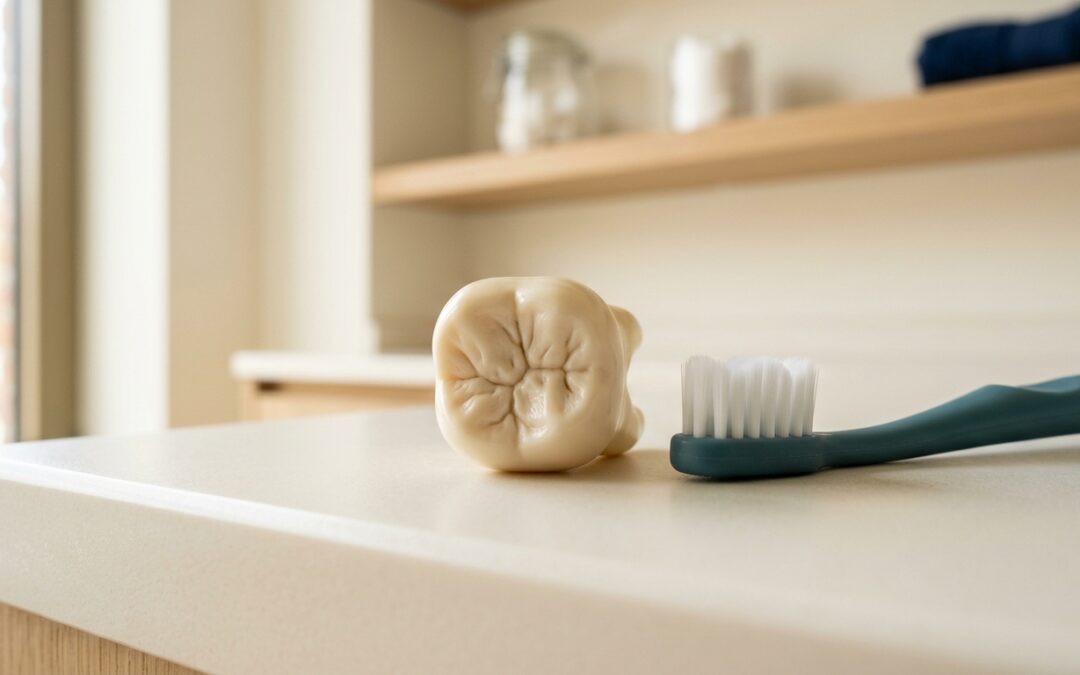
To understand root canal treatment, you first need to know what is inside a tooth. Inside each tooth is a space containing the dental pulp: living tissue made up of nerves and blood vessels. This tissue is what allows the tooth to sense heat, cold or pain.
When the pulp is severely damaged, by a very deep cavity or by trauma (a blow, for example), it can become irreversibly infected or inflamed. In that case, the pulp can no longer be kept as it is. Root canal treatment, also called endodontic treatment, involves removing the damaged pulp, carefully cleaning the canals inside the root and then sealing them tightly to protect the tooth over the long term.
The aim, and this is essential, is not to lose the tooth: on the contrary, it is to keep it in the dental arch. A tooth that has had a root canal can continue to fully play its role, provided it is properly treated and then properly restored.
When is this treatment necessary?
Several situations can lead a dentist to recommend root canal treatment. Signs that call for a prompt appointment include:
- Persistent or throbbing pain in a tooth, even without any external trigger.
- Very strong sensitivity to heat that does not fade quickly.
- Swelling of the gum around a tooth, sometimes with a feeling of pressure.
- A tooth that has suffered a blow (fall, accident) and behaves differently afterward.
- A cavity detected late that has reached the pulp.
These symptoms do not automatically mean root canal treatment is needed: only a clinical examination can confirm it. In case of severe pain or swelling, it is important to contact the clinic promptly so that an infection does not spread.
The operating microscope: a precision tool, not a gimmick
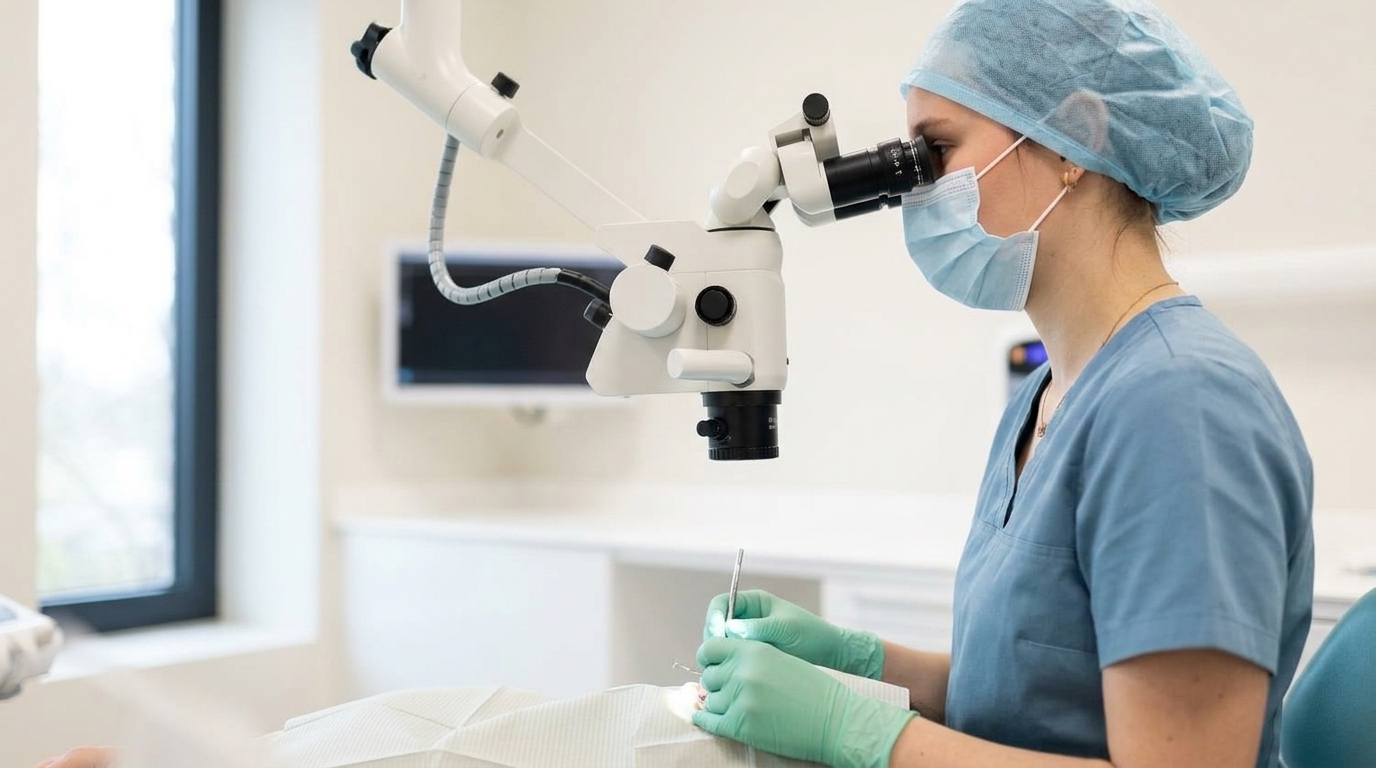
At Clinique Keller, root canal treatments are carried out under an operating microscope. In practical terms, what difference does it make for you?
The canals inside a tooth root are extremely fine, often curved, and sometimes more numerous than expected. With the naked eye, even with good lighting, some details remain invisible. The operating microscope greatly magnifies the practitioner’s field of view and lights it precisely. This level of visibility makes it possible to:
- Find additional canals that might otherwise have been missed.
- Clean each canal much more thoroughly.
- Detect cracks or complications that would otherwise be invisible.
- Seal the canals with greater precision, for a more reliable result.
In other words, the microscope does not change the nature of the treatment: it considerably improves how well it is carried out. It is a real difference, not just a technical one, and it affects you directly as a patient.
How does root canal treatment work in practice?
Knowing what to expect is often what helps most in approaching treatment calmly. Here are the main stages of root canal treatment:
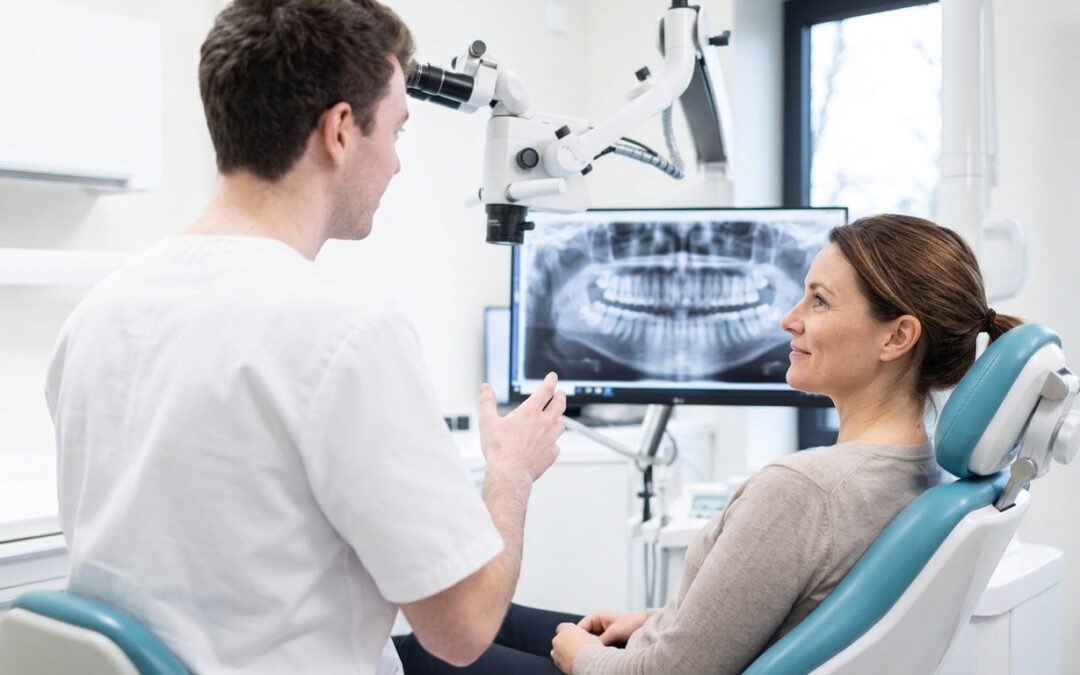
- Examination and X-rays: before any procedure, the practitioner assesses the condition of the tooth with an X-ray, sometimes a CT scan. This shows the shape and number of canals, as well as how far the infection has spread.
- Placing a dental dam: a thin latex sheet (or another material in case of allergy) is placed around the tooth. It isolates the treated tooth from the rest of the mouth, keeping the work area clean and protecting the other teeth.
- Cleaning the canals under the microscope: the practitioner removes the damaged pulp, then meticulously cleans and disinfects the entire canal system. This is the central step, made much more precise by the operating microscope.
- Filling the canals: once the canals are clean and dry, they are filled with a biocompatible material to protect them over time.
- Final restoration: a tooth that has had a root canal is often weakened. It will then be restored, sometimes with a crown, to give it back its full strength.
The treatment may take one or more sessions, depending on each patient’s situation. The practitioner will explain this during the consultation.
What about pain?
This is often the first question, and it is perfectly normal to ask it. What you should know is that root canal treatment is performed under local anesthesia. The practitioner makes sure you are comfortable before starting. If you feel anything uncomfortable during the treatment, you can say so right away.
After the treatment, slight sensitivity or discomfort can sometimes be felt for a few days. This is a normal reaction of the tissue around the tooth as it heals. Your practitioner will explain what to watch for and what to do if needed.
It is worth remembering that the pain felt before root canal treatment is often far more intense than the procedure itself. This treatment is precisely what ends that pain.
After root canal treatment: what you need to know
A tooth that has had a root canal remains a full part of your dental arch: it is still supported by the bone and gum. It no longer has internal sensation, which means it will no longer signal pain the way a healthy tooth does. That is why it is all the more important to keep having regular check-ups.
A few points to remember:
- Attend the follow-up appointments your practitioner suggests.
- Plan the final restoration (crown or other) within the recommended time frame: a tooth left unrestored after a root canal is weakened.
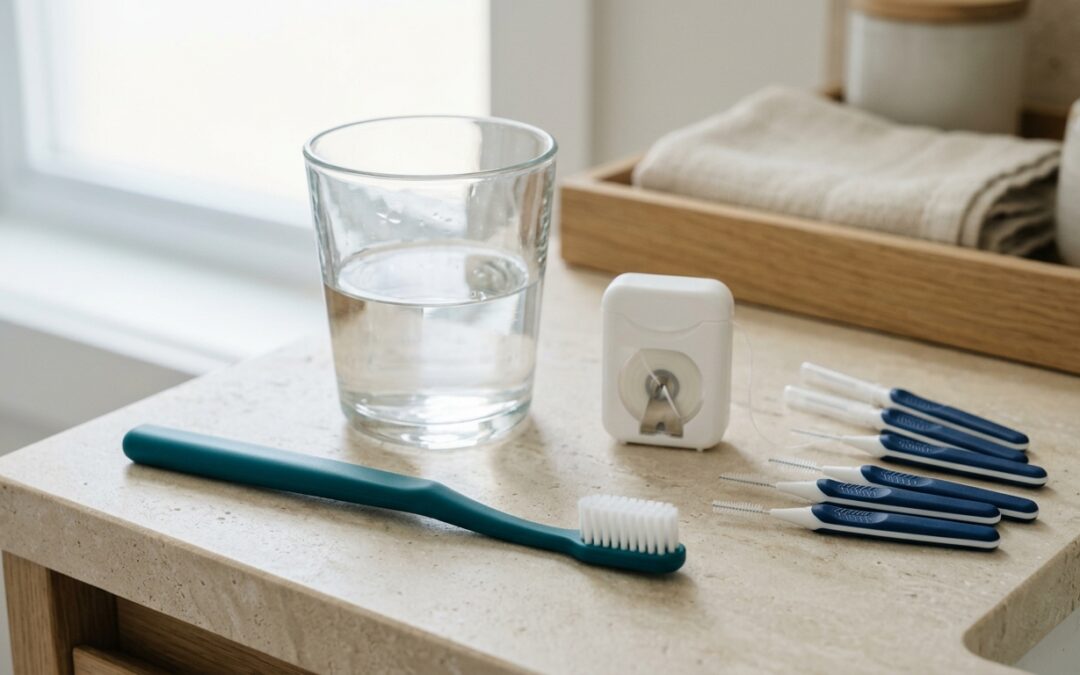
- Keep brushing and cleaning this tooth like the others.
Clinique Keller also offers dental hygiene follow-up with a hygienist, an ideal complement after this type of treatment.
Comprehensive care in Woluwe-Saint-Lambert
What makes care at Clinique Keller particularly suitable for anxious patients is how closely the team works together. Endodontics is not practiced in isolation: it is part of a coherent care pathway in which restoration, periodontal follow-up and hygiene are coordinated according to your needs.
For patients from Woluwe-Saint-Lambert, Woluwe-Saint-Pierre, Kraainem, Etterbeek, Evere or Schaerbeek, the clinic is easy to reach by public transport (metro line 1, Gribaumont station).
To learn more about endodontics at the clinic, see our endodontics page. And if you would like personalized advice about your situation, the first step is always a clinical examination: no article, however detailed, can replace the opinion of a practitioner who examines you.
Key point: root canal treatment makes it possible to keep a natural tooth. Performed under an operating microscope, it benefits from a high level of precision. Feeling apprehensive is understandable, but it should not delay an appointment: the earlier the treatment, the simpler it is.
Book an appointment at Clinique Keller
Do you have persistent pain, a tooth that worries you or simply questions about root canal treatment? Do not wait for the situation to get worse. You can book an appointment online on the Clinique Keller website or call us directly at +32 2 772 10 15, Monday to Friday from 9 am to 6 pm. The clinic is located at Avenue de Broqueville 249 in Woluwe-Saint-Lambert, reachable by metro line 1, Gribaumont station.