


Endodontics
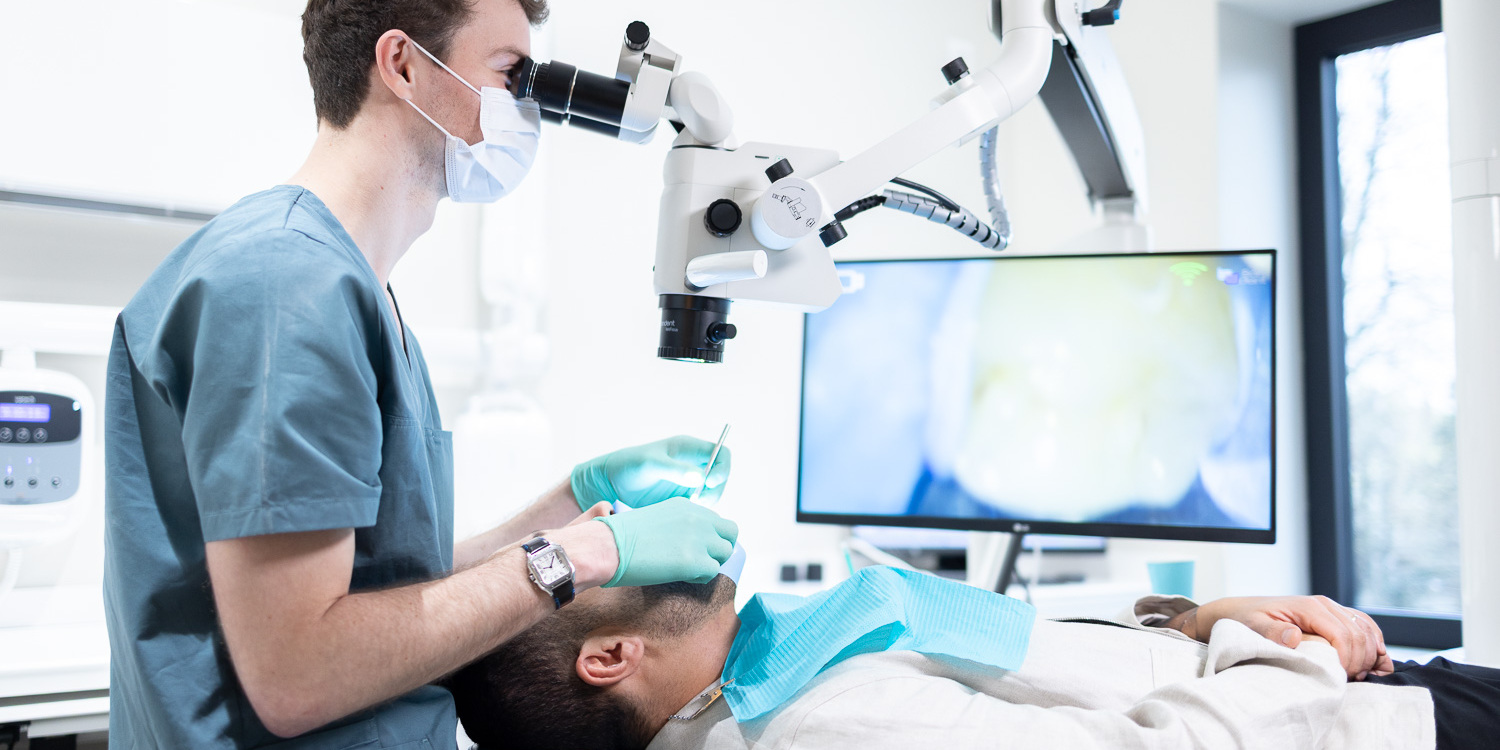
Root canal treatment under the microscope for optimum results.
Endodontics
Preserve your teeth with the precision of microscopic treatment
Endodontics is the specialty dedicated to treating the inside of the tooth, specifically the dental pulp (the nerves and blood vessels). The primary objective is to preserve the natural tooth on the arch, even when it has been severely damaged by deep decay or trauma.
At the Clinique Keller, we perform these delicate procedures under an operating microscope, guaranteeing the utmost precision in eliminating infections and hermetically sealing canals.
Devitalization (Root canal treatment)
When a tooth is infected or the pulp is exposed, a root canal is required. Under a microscope, we thoroughly clean the entire root canal system to eliminate bacteria. This crucial step stops pain and disinfects the tooth before filling, thus avoiding extraction.
Resuming endodontic treatment
Occasionally, an old root treatment develops a new infection or is incomplete. In such cases, we perform a “re-do”: we remove the old filling material, disinfect the canals under high microscopic visibility and perform a sealant to give the tooth a second chance.
Endodontic surgery
In complex cases where conventional root canal treatment is not sufficient to eliminate infection at the root tip (apex), we perform a-pical surgery. This micro-intervention allows direct access to the infected area to clean it and seal the root at its base, thus ensuring the survival of the tooth.
Using the operating microscope
The microscope is the indispensable tool of modern endodontics. It offers a magnified view of dental canals, often invisible to the naked eye. This technology enables us to detect cracks, locate accessory canals and treat roots with surgical precision, dramatically increasing the success rate.
Diagnosis of dental pain
Sharp, stabbing pain or extreme sensitivity to hot and cold are often signs of pulp inflammation. Our team performs vitality tests and precise radiological examinations to determine the exact origin of the pain and suggest the most appropriate endodontic treatment to bring you rapid relief.
Post-endodontic restoration
Once root canal treatment has been completed, the tooth becomes more fragile. It’s vital to protect it with a watertight restoration, crown or onlay, to avoid fracture or reinfection. We can advise you on the best option to restore your tooth to its original strength and chewing function.
Making an appointment
Book an appointment online, fast
24-hour availability to choose your specialist and time slot with ease.
Other Clinique Keller specialties
FAQ
Frequently asked questions about endodontics
Root treatment often raises concerns. Here are answers to the most common questions to help you understand the importance of endodontics in preserving your teeth.
Does a root canal hurt?
It's a common misconception: endodontic treatment is designed to put an end to pain. Thanks to modern local anaesthetic techniques, the procedure is totally painless. If you're suffering from a toothache or abscess, you'll feel immediate relief after the session.
Why use a microscope to treat a root?
Dental canals are as fine as a hair. The microscope makes it possible to see details that would otherwise be impossible to perceive. This reduces the risk of error (such as overlooking an infected canal) and enables a much more thorough cleaning to be carried out, ensuring that the tooth lasts longer in the long term.
Can a devitalized tooth still have a cavity?
Yes, although the tooth is no longer sensitive to heat or cold because it no longer has a nerve, it is still subject to bacterial attack. Without rigorous hygiene and a protective restoration (crown), a cavity can develop without you feeling any pain, hence the importance of regular check-ups.